How Many People in Denmark Speak English?
The Nordic countries are known for having the best English speakers in the world. Even though the title of the most proficient in English switches periodically between the Scandinavian countries, Denmark has consistently been in the top 10 best worldwide.
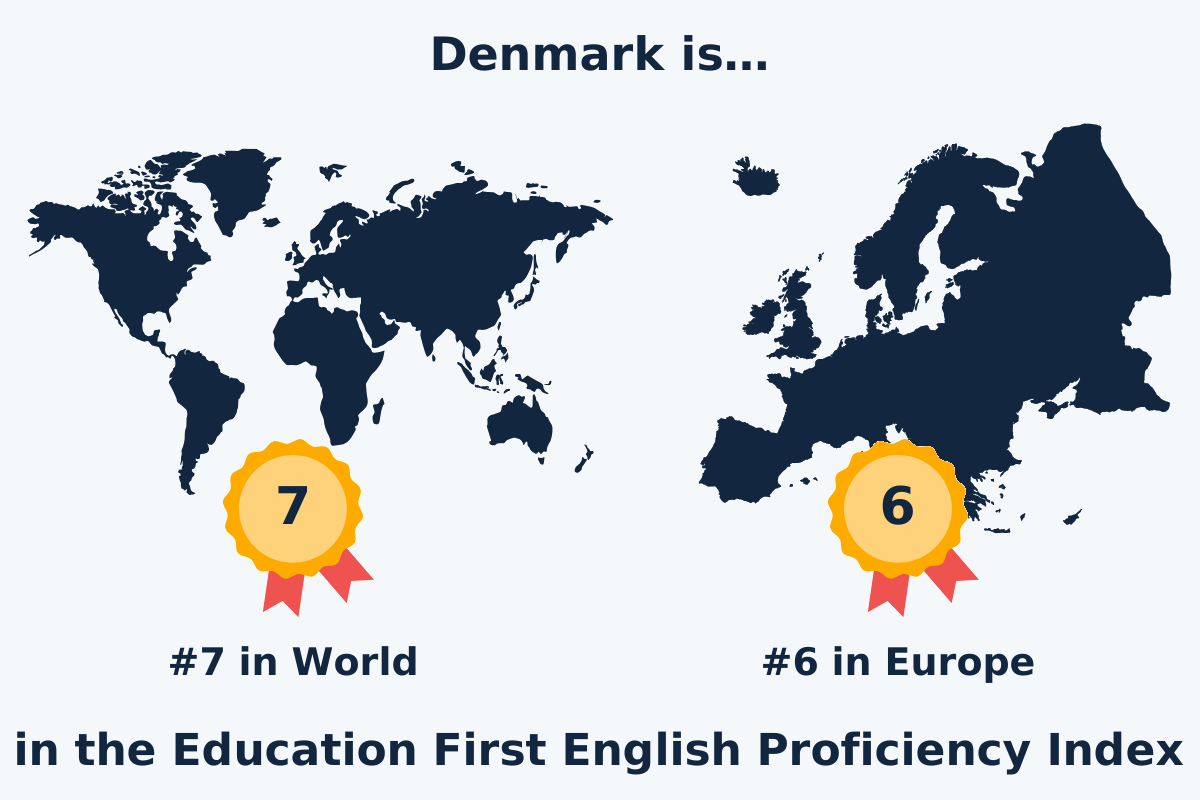
According to the most recent data, the vast majority of Danes speak at least one foreign language, English being the most common second language choice. Almost everyone can speak English in Denmark to some extent, and most have either good or excellent language skills. In 2024, Denmark ranked 6th in Europe and 7th worldwide for English proficiency.
Currently, certain regions and demographic groups in Denmark have even better English than the national average.
Keep reading to find out more interesting facts about English language statistics in Denmark!
What Percentage of People in Denmark Speak English?
Most Danes speak English fluently. The latest data about English in Denmark comes from the Eurobarometer report (2012) and the Eurostat (2016). Here’s what we know about English in Denmark, according to the 2012 survey:
- 89% of Danes speak at least one foreign language, and the vast majority of them speak English.
- 86% of people in Denmark speak English well enough to have a conversation.
- The majority of Danish people under 55 years old know English, compared to just 44% of those aged 55+.
- 76% of Danes know English well enough to follow the news on TV or radio.
- 73% can read a newspaper or magazine article in English.
- 68% know English well enough to communicate online.
In other words, the majority of Danish people report having good or excellent English skills, being able to read, write, and speak English, or listen to spoken English at a B2 level or higher. The subsequent 2016 survey had similar results:
- 41% of Danes claimed to be proficient in their best-known foreign language.
- 34.5% claimed to have a good level of command of their second language.
- Less than 25% of Danes claimed only a basic level of knowledge in a second language.
- The percentage of Danes who were good or proficient in a second language increased from 72% in 2011 to roughly 76% in 2016.
The data from both surveys was self-reported, and people were asked to assess their own language skills. However, results from proficiency tests are similar. Overall, 86% of Danes speak English, and the overwhelming majority are fluent and have a great command of the language.
Sources: Eurobarometer, Languageknowledge.eu, Council of Europe, Eurostat
Number of English Speakers in Denmark (General Stats)
Did you know that Denmark is one of the few countries where almost everyone knows at least one foreign language, regardless of age? The most common foreign languages spoken in Denmark include German, Swedish, French, Spanish, and, of course, English.
Of all foreign languages in Denmark, the most widely spoken is English. Not only do most people speak English in Denmark, but the average Dane can use English at an advanced level. Let’s take a closer look at English speakers in Denmark:
-
Over 5 million people in Denmark speak English as a second language.
-
Less than 1% of the Danish population speaks English as a mother tongue.
-
Over 80% of Danes speak at least one foreign language. However, Danes under 55 are the most likely to speak English. Those over 34 years old are also more likely to speak French, German, or Swedish.
-
Danish children begin learning English at a very early age, usually at 6 years old. English is a mandatory subject starting in first grade.
-
The English Proficiency Index (EPI) ranked Denmark 7th in the world in 2024. With a score of 603 points, Denmark was ahead of Norway and Sweden, but behind the Netherlands and Austria in Europe.
-
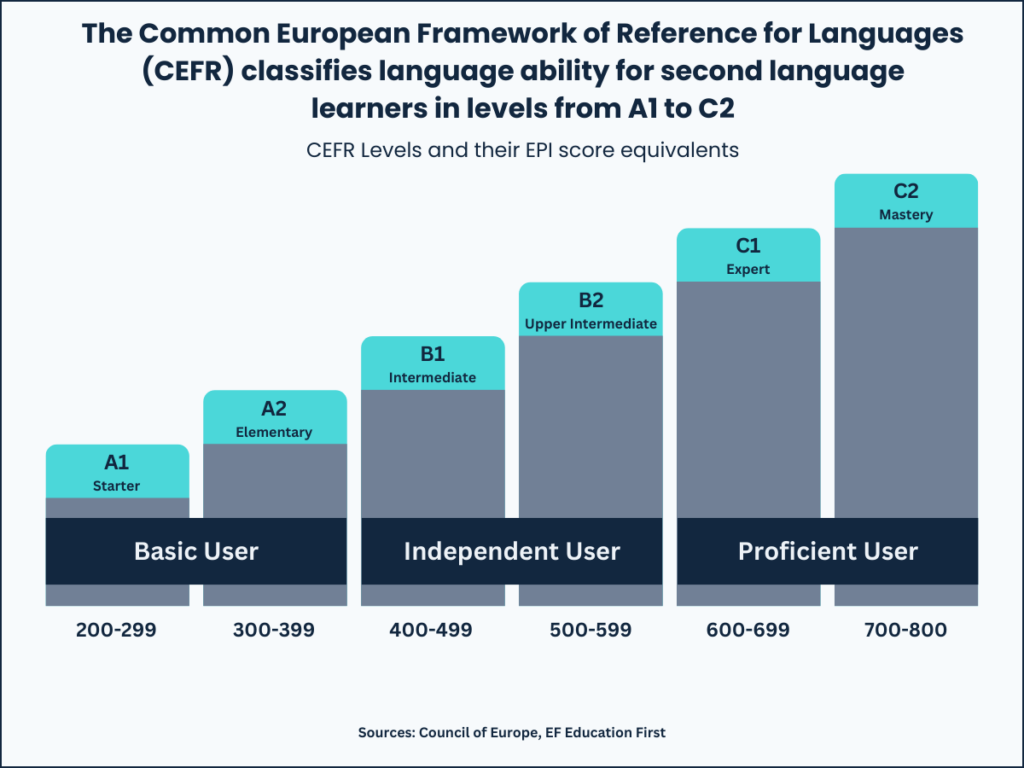
According to EF data, the average English proficiency in Denmark is equivalent to a CEFR level of C1 (advanced).
-
All age groups have very high proficiency on average, although Danish people aged 21-30 years old have the highest scores.
-
Central Denmark has the best English in the country.
-
Copenhagen is the third most English-friendly capital in Europe, with an EPI score of 633 points.
10. Over half of Danes living in big cities and roughly a third of Danish people living in rural areas claim to be proficient in a foreign language. This doesn’t include the people who would assess their language skills as merely “good” or “basic”.
11. According to the 2012 Eurobarometer report, Danes are highly likely to use a foreign language in their free time.
Roughly 70% reported using their second language on the internet and when watching movies. 42% used a foreign language to read books or newspapers, and over a third said they regularly use a foreign language to communicate with friends.
It’s pretty clear that Denmark is among the countries with the largest share of fluent English speakers. English is quite common even among the older population and in rural areas, which is rare in most countries where English is taught as a foreign language.
Are you curious how other Nordic countries compare? Check out our other articles to find out how many people speak English in Norway, Finland, or Sweden.
Sources: Eurobarometer, Languageknowledge.eu, Eurostat, Eurydice, Education First
Where In Denmark Is English Widely Spoken?
Most people in Denmark speak English, regardless of region or city. However, the North Jutland Region has a lower population and the lowest English proficiency in the country. People living in rural areas are also the least likely to be proficient in English, while the majority of Danes living in urban areas claim to have excellent language skills.
Overall, the Midtjylland region (also known as Mid Jutland Region) has the best English skills, according to proficiency trends. The Hovedstaden region (Capital City Region) has the most English speakers thanks to its very large population.
In most Danish regions, the average English proficiency is high to very high. Here’s how four of Denmark’s regions compared in 2024:
| Region | EPI Score | Proficiency Level | CEFR Level |
|---|---|---|---|
| Midtjylland (Mid Jutland) | 631 | Very High | C1 (Advanced) |
| Hovedstaden (Capital City Region) | 610 | Very High | C1 (Advanced) |
| Sjælland (Zealand) | 591 | High | B2 (Upper-Intermediate) |
| Syddanmark (Southern Denmark) | 584 | High | B2 (Upper-Intermediate) |
The largest cities in each region likely have the most and best English speakers overall, followed by smaller towns and suburbs. Copenhagen, Denmark’s capital has a proficiency score of 633 points in 2024.
The EPI doesn’t include scores for any other Danish cities, but English speakers in other major metropolitan areas like Aarhus and Odense are also likely to have very high proficiency. Roskilde and other large municipalities in Sjælland are probably not far behind in terms of English skills.
People in Aalborg and other cities in North Jutland might have lower English proficiency, but can still speak English with reasonable fluency. Check the chart below to see how language skills compare between a C1 and B2 level:
However, these are just averages. There are definitely going to be a few people with below-average and above-average English in any region and city. The EPI also doesn’t calculate proficiency scores for cities with under 400 test takers, which is why only Copenhagen was included in the most recent data.
Sources: Education First, Eurostat
English Speakers in Denmark by Demographic Group
The vast majority of Danish people know English to some degree. But do you know who’s more likely to speak the best English? What about those least likely? Let’s take a closer look at the demographic breakdown of English speakers in Denmark:
- According to 2016 Eurostat data, age doesn’t play a big role in the likelihood of people knowing a second language. Over 90% of Danish people aged 25-64 claimed to know one or more foreign languages.
- But, according to the 2012 Eurobarometer survey, Danish people aged 55+ were the least likely to know English. Only 44% of people in this age group said they spoke English, while the remainder claimed to know German, Swedish, or French.
- Over half of Danish people aged 35-54 speak English. This age group is also the most likely to speak German, Swedish, or French.
- People aged 15-34 are the most likely to speak English, and also less likely to speak Swedish compared to all other age groups.
- Age likely plays a role in foreign language skills. Adults aged 45-64 were the least likely to claim proficiency in their best-known foreign language. Only around a third of this group considered themselves proficient in 2016. On the other hand, more than half of Danes aged 25-44 claimed to be fluent in their second language.
- With regards to English proficiency alone, Danish people aged 41+ used to be behind other age groups, though their overall English level has caught up to the rest within the past few years. In 2016, Danes 41+ years old had high proficiency and a score of 571 points. In 2024, the proficiency level for this age group was very high, and the average score was 601.
- Danes aged 21-30 have the best English skills, followed by those aged 31-40, 41+, and 18-20 years old.
- English proficiency has remained stable in those aged 21-40 years old. English skills for those between the ages of 18-20 have been on a continuous downward trend, going from a score of 668 in 2016 to 604 points in 2024. Nevertheless, all age groups had an average English level of C1 (Advanced) in 2024.
- Both Danish men and women have very high proficiency, although men have been scoring several points more than women since 2017.
- Language skills also differ depending on education and qualification. Over 50% of Danes with a tertiary education claim to be proficient in a foreign language, compared to under 40% of those with an upper secondary education.
- Those most likely to be proficient in a second language also tend to work in managerial positions or be qualified professionals in fields such as science, engineering, healthcare, teaching, business, IT, or law.
- Only 30% of Danes living in rural areas describe themselves as proficient in a second language, compared to 40% of those living in towns and suburbs, and over 50% of those living in cities. The rest have either good or basic knowledge of a second language.
Almost everyone in Denmark knows a second language to at least a basic level. However, those with the best foreign language skills are younger, highly educated, and tend to live in large cities. Danish people between the ages of 15 and 34 are the most likely to speak English overall, and those aged 21-30 are the most proficient.
Most adults aged 35-54 also speak English, and the average proficiency level is very high. While those over 45 were less likely to claim excellent language skills in 2016, the average proficiency level within this group has been slowly improving.
Even over 40% of Danes aged 55+ years old speak English, and a third of them are likely to speak the language fluently according to self-reported data from 2012 and 2016. Within the past 8 years, more proficient English speakers have entered their 40s and 50s. This trend of improvement is obviously going to continue as the younger generations keep learning English as their main second language.
Sources: Eurostat, Eurobarometer, Languageknowledge.eu, Education First
Conclusion
Denmark has long been one of the most English-friendly countries in the world. The vast majority of Danish people know English, and most people can speak the language effortlessly.
This is especially the case for young adults. But even a good number of Danes in their 50s claim to know English quite well. It’s no surprise that Denmark is currently ranked as the third most proficient country in Europe.
FAQs
1. Why is English so widely spoken in Denmark?
Multiple factors contribute to the widespread use of English in Denmark. Like in other European countries, Danish children start learning English at a very early age. The Danish language is also quite similar to English, which makes it easier for those who learn the language to pick up new words, grammar, and pronunciation rules.
Danish people are also more likely to get exposed to English in their daily lives. In the EU, Danes are among the most likely to use the internet, read books, and watch movies in a foreign language. Furthermore, over 90% of Danish people said they prefer watching foreign movies with subtitles, rather than dubbing.
2. What languages are spoken in Denmark?
The official language of Denmark is Danish, a North Germanic language closely related to Swedish and Norwegian. There are also a few officially recognized minority languages, namely Faroese, Greenlandic, and German.
A lot of people in Denmark are bilingual, speaking Danish as a first language, and a second foreign language. The most common foreign languages taught in Danish schools are English, German, Swedish, and French. Most Danish people speak English as their second language.
3. Can visit Denmark without speaking Danish?
You definitely don’t need to learn Danish to visit or even live in Denmark. Most people in Denmark are fluent in English, especially younger adults and those living in larger cities. According to tourist accounts, it’s quite easy to find people who speak English almost anywhere, so it’s unlikely to encounter a language barrier even if you don’t know any Danish.
English is also quite common in Danish workplaces and educational institutions. As an E.U. country, Denmark is a popular destination for exchange students in the Erasmus+ program. Thousands of foreign students move to Denmark for extended periods to work and study in the country, even without speaking the local language.

Written by Diana Ploscaru
Diana is a trilingual ESL teacher and writer with a M.A. in Translation and Terminology. She has spent over 10 years studying English, German, and philology, and now wants to share her knowledge and passion with other linguistics enthusiasts.