How Many People in Greece Speak English?
According to estimates from European surveys, more than a third of EU citizens speak English as a second language. But the share of English speakers varies considerably across individual countries, anywhere from 20% to 90% of the population.
Greece is among the European countries with the most non-native English speakers, a fact which comes as a surprise to some. Compared to its neighbors in Southern Europe, the majority of people speak English in Greece, and the number of foreign language speakers is still slowly increasing.
Currently, a little more than one in two Greeks can speak English. The number of non-fluent people with basic English knowledge is likely higher. What is more, the number of highly proficient English speakers in Greece is also on the rise. In 2023, Greece entered the top 10 list of the best English-speaking countries in Europe for the first time.
Keep reading to find out more about English language statistics in Greece!
What Percentage of People in Greece Speak English?
According to a 2012 Eurobarometer report, Greece beat the EU average for the number of people who speak at least one language, as well as people who speak English. A majority of Greek people are bilingual, being able to speak both Greek and English. Let’s take a closer look at the survey results:
- 57% of people in Greece claimed they can speak at least one foreign language, primarily English. In fact, 89% of those who know at least one foreign language, speak English.
- 51% of the Greek population speaks English fluently, as they are able to use English to have a conversation (compared to the 38% EU average)
- 47% of Greeks have listening skills good enough to follow the news in spoken English.
- 45% of Greeks understand English well enough to read newspaper or magazine articles in written English.
- 50% of English speakers in Greece know English well enough to communicate online.
Overall, at least half of Greeks have the writing and speaking skills necessary to effectively communicate in English in a daily situation. Slightly fewer people reported similar listening and reading skills. The number of fluent English speakers is likely higher now than in 2012, especially in the younger population.
A subsequent 2016 Eurostat report showed that foreign language skills in Greece are getting better still:
- In 2016, 66.5% of Greeks spoke at least one foreign language.
- 87% of Greeks aged 25-34 reported speaking at least one foreign language compared to just 40% of those over 55 years old.
- The percentage of people reporting excellent language skills increased from 13% in 2011 to slightly over 30% in 2016.
- The share of people with only basic foreign language knowledge decreased from 47% to 34%
The Eurostat survey doesn’t mention English separately but includes all respondents who speak any foreign language. That said, the majority of foreign language speakers and learners in Greece choose English as their second language, so most of the improvements are likely within the English speaking population.
Sources: Eurobarometer, Eurostat
We have the figures for several other countries besides, including Finland, Mexico, China, and Spain.
Number of English Speakers in Greece (General Stats)
Scandinavian countries and the Netherlands are known for having the most proficient English speakers in the world. Greece, on the other hand, doesn’t typically come to mind when discussing English skills. But did you know that Greece is among Europe’s most English-friendly countries?
English is widely spoken in Greece, and the level of English among the Greek population is pretty good. Here’s what the latest data from European survey and proficiency tests can tell us about English in Greece:
-
English is the second most commonly spoken language in Greece besides Greek. However, less than 1% of Greeks speak English as a mother tongue.
-
Over half of the population, or roughly 5.5 million people in Greece speak English as a second language, according to 2012 estimates.
-
Most Greeks believe English knowledge is important. Over 70% of Greeks find English useful for personal development and over 90% choose English as the main foreign language that children should learn.
-
English skills are on the rise, according to proficiency trends outlined by the EF English Proficiency Index (EPI). The average proficiency level in Greece went from moderate in 2017 to very high in 2023.
-
The average proficiency level in Greece in 2024 was equivalent to a CEFR level of C1, which suggests that a large number of Greeks speak fluent English.
-
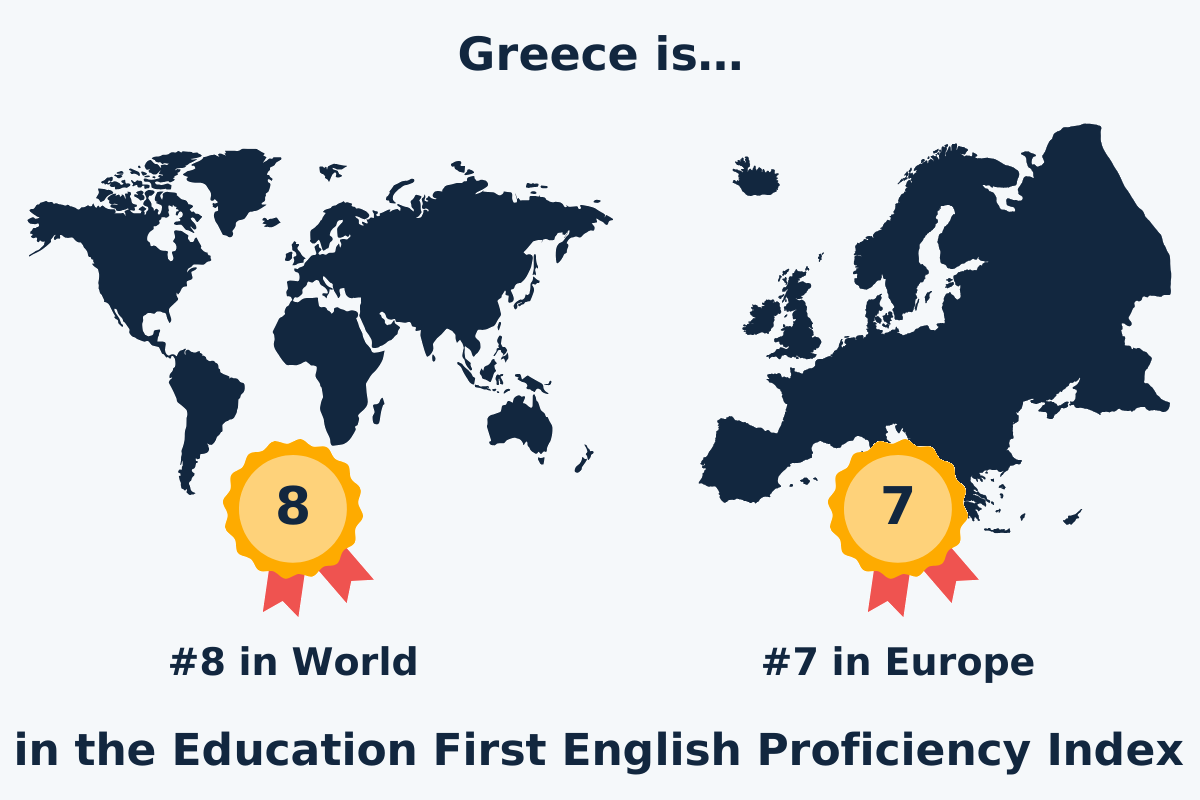
Currently, the EPI ranks Greece as 7th in Europe and 8th globally, putting it among the best English-speaking countries in the world.
-
Athens, the capital city of Greece, had very high English proficiency in 2024 with a score of 613 out of a possible 800.
-
Greek people under 35 years old are the most likely to speak English, while those aged 55+ are the least likely to speak any foreign language overall.
-
Greeks aged 31-40 years old were the most proficient English speakers in 2023.
10. Foreign language proficiency in Greece is heavily correlated with education level. Over 50% of Greeks with a higher education claim to be proficient in their second language, compared to less than 20% of people without a degree.
11. English is not equally widespread across all of Greece. Less than 20% of those living in rural areas claimed to be proficient in a foreign language, according to a 2016 Eurostat survey. English is spoken primarily in urban areas.
12. Greek children start learning English at an early age. English is also a compulsory school subject in Greece starting in third grade, roughly at the age of 8 years old. Within the past decade, some Greek schools have started offering English language classes as early as first grade (age 6).
13. Private English classes are also increasingly popular among Greek children and teens. Furthermore, students in Greece who attend private language classes reach higher English proficiency and improve their language skills at a faster rate.
14. According to Alexiou and Mattheoudakis (2013), the number of Greek children who take EFL exams at the end of primary school is the highest in Europe. A good number of Greek teenagers have pre-intermediate or intermediate English language skills by the time they enter middle school.
English is not as widespread in Greece as in Northwestern Europe. But Greek people are still more likely to speak English compared to the EU average. In Southern Europe, Greece is one of the best English-speaking countries, surpassing Italy and Spain in both the share and proficiency of its English speaking population.
Overall, the average Greek person is likely to know at least some English, and many people in Greece can speak English well enough to have a conversation. Also, a lot of Greek people can easily understand written and spoken English.
In fact, 44% and 52% of Greeks report regularly using a foreign language when watching TV or using the internet, respectively. English is especially common among younger people, with those in their 20s and 30s being the most proficient.
Sources: Languageknowledge.eu, Eurobarometer, Education First, Eurostat, RPLTL
Where In Greece Is English Widely Spoken?
Most fluent English speakers in Greece live in urbanized regions, primarily Attica, Central Macedonia, Crete, Eastern Macedonia and Thrace, part of the North and South Aegean islands, and Thessaly. Big cities have the most English speakers, followed by smaller towns and suburbs. Rural areas have the least people who know English.
English is especially common in Greece’s largest metropolitan areas, namely:
- Athens
- Thessaloniki
- Patras
- Heraklion
- Larissa
- Piraeus
Athens, Thessaloniki, and Patras are the three most important cities in Greece, and home to the largest number of international businesses as well as private English language schools. Unsurprisingly, there’s a high demand for fluent English speakers in the local job market, as well as a wider offer of educational opportunities for English learners of all ages.
Most young Greeks living in these cities speak English, and the average level of proficiency among those under 40 years old is high to very high. In 2024, for example, English speakers in Athens had an average English proficiency score of 613 points, equivalent to a CEFR level of C1.
According to CEFR assessment criteria, English speakers at this level can:
- Understand a wide range of long and complex texts and recognize finer nuances like implicit meaning
- Follow extended speech and understand news programs, documentaries, and films in standard spoken English
- Express themselves fluently and spontaneously without obvious pauses or searching for the right word or expression
- Use the English language flexibly and effectively in various settings (professional, academic, or social)
Looking at these stats, the average English speaker in the Greek capital likely knows English at a level similar to someone in Germany or Sweden. There are no proficiency scores for other Greek cities but it’s likely that Greeks living in other major metropolitan areas have similarly high fluency.
According to 2016 statistics, the number of proficient foreign language speakers is slightly lower in Greece’s smaller towns and suburbs. However, English is still common in popular tourist areas, many of which happen to be smaller towns. Towns on islands like Crete, Rhodes, Mykonos, or Santorini attract a lot of tourists every year, the majority of them being British.
Nowadays, it’s common to hear English in local hotels, restaurants, and shops. English menus are easy to find in most restaurants, and most signage is also typically bilingual. A lot of Greek road and information signs are also in English, and Greek road names are typically written in both the Greek and Latin alphabets.
Sources: Eurostat, Education First, Council of Europe, Statista
English Speakers in Greece by Demographic Group
On average, one in two Greeks can speak English. However, the percentage of people who know English varies drastically across different subgroups in the population. So, let’s see who’s the most and the least likely to speak English in Greece:
- Nearly half of Greeks under 35 and around a third of those aged 35-54 reported knowing English in 2012.
- People over 55 are the least likely to speak any foreign language, and just 14% of this age group knows English.
- Age also plays a role in foreign language proficiency. In 2016, almost 40% of Greeks aged 25-34 reported they were proficient in their best-known foreign language, compared to 30% of those aged 35-44 years old, and less than 30% of those over 45.
- Greeks living in cities and suburbs are the most likely to have good or great language skills. Less than 1 in 5 Greeks living in rural areas reported they were proficient in a foreign language in 2016.
- Over 50% of those with a tertiary education are proficient in a foreign language, compared to less than 20% of those with a post-secondary level of education or lower.
- The same 2016 Eurostat report tells us more about foreign language knowledge by occupation. Those most likely to have great foreign language skills work as managers, professionals, technicians, and associate professionals.
- The EU’s ESCO classification defines “professionals” as those working in fields such as science and engineering, healthcare, teaching, business and administration, IT, or law.
- Unsurprisingly, one of the main motivations for learning English in Greece is related to work opportunities. In the 2012 Eurobarometer survey, 69% of respondents said the main advantage of learning a new language is the ability to get a better job in the country, considerably more than the 45% EU average.
- In the 2023 edition of the EF English Proficiency Index, Greek women had 594 points, falling just below the “high proficiency” band. Greek men meanwhile, scored 15 points, falling above the “high proficiency” threshold. Overall, proficiency has remained stable but has been increasing in both groups since 2017.
- All age groups have either high or very high English proficiency. Greeks aged 31 to 40 years old had the highest average score (628 points), followed by those aged 21-30 years old (603 points).
- Greeks aged 18-20 years old and those over 41 had nearly identical scores in 2023, and both age groups fell within the “high proficiency” band.
Overall, age, education, and occupation play the biggest role in the likelihood of foreign language skills, English included. Those under 35, those with a higher education, and those working high-collar jobs are the most likely to know English very well.
Sources: Languageknowledge.eu, Eurostat, Eurobarometer, Education First
Conclusion
English has become quite widely spoken in Greece over the past few decades. Currently, Greece is one of the most English-friendly countries in Europe. According to the latest data, over half of the population speaks English, and the level of English spoken in Greece is very high.
In 2024, Greece also ranked 7th in Europe for the best English skills on average. Many Greeks speak English fluently today, with young adults and people living in large cities being the most likely to know the language very well. The level of English in Athens, for example, is similar to that of other big European cities.
FAQs
1. What languages are spoken in Greece?
The official language of Greece is Standard Modern Greek, spoken by over 99% of the population. Greece also has a few linguistic minorities, primarily Turkish, Albanian, Aromanian, and Macedonian speakers.
The majority of Greeks also speak at least one foreign language, primarily English. In fact, besides Greek, the other language most widely spoken is English. Other foreign languages spoken in Greece include German, French, Italian, and Russian.
2. Why is English more common in Greece than in other European countries?
There are multiple probable factors at play here. The growing popularity of private language schools in Greece is one of them. Greek people are also more likely to use foreign languages in their free time, compared to the EU average. More Greek people report using a foreign language on the internet and consuming foreign-language media.
With regards to foreign movies, Greek people are more likely to prefer subtitles, rather than dubbing. Greeks are also more motivated to study foreign languages to find better jobs in their country or to work and study abroad. Unlike French or Spanish, Greek is not taught or spoken internationally, which makes learning English all the more important.
3. Can you visit Greece without speaking Greek?
You certainly don’t need to learn Greek just for traveling to Greece. Much of the Greek population can speak English, especially Greeks in large cities and those living around popular tourist areas. Even in smaller towns, most locals understand English to some extent. It shouldn’t be too difficult to find someone who knows English, or at least some basic English.
If you’re planning to visit rural Greece, you might need to learn some basic Greek, as older people and the rural population likely don’t speak English. Learning a few basic Greek phrases, and a few common Greek words, and getting familiar with the Greek alphabet can come in handy in such areas of Greece, where you might be more likely to encounter a language barrier.

Written by Diana Ploscaru
Diana is a trilingual ESL teacher and writer with a M.A. in Translation and Terminology. She has spent over 10 years studying English, German, and philology, and now wants to share her knowledge and passion with other linguistics enthusiasts.