How many people speak English in Belgium?
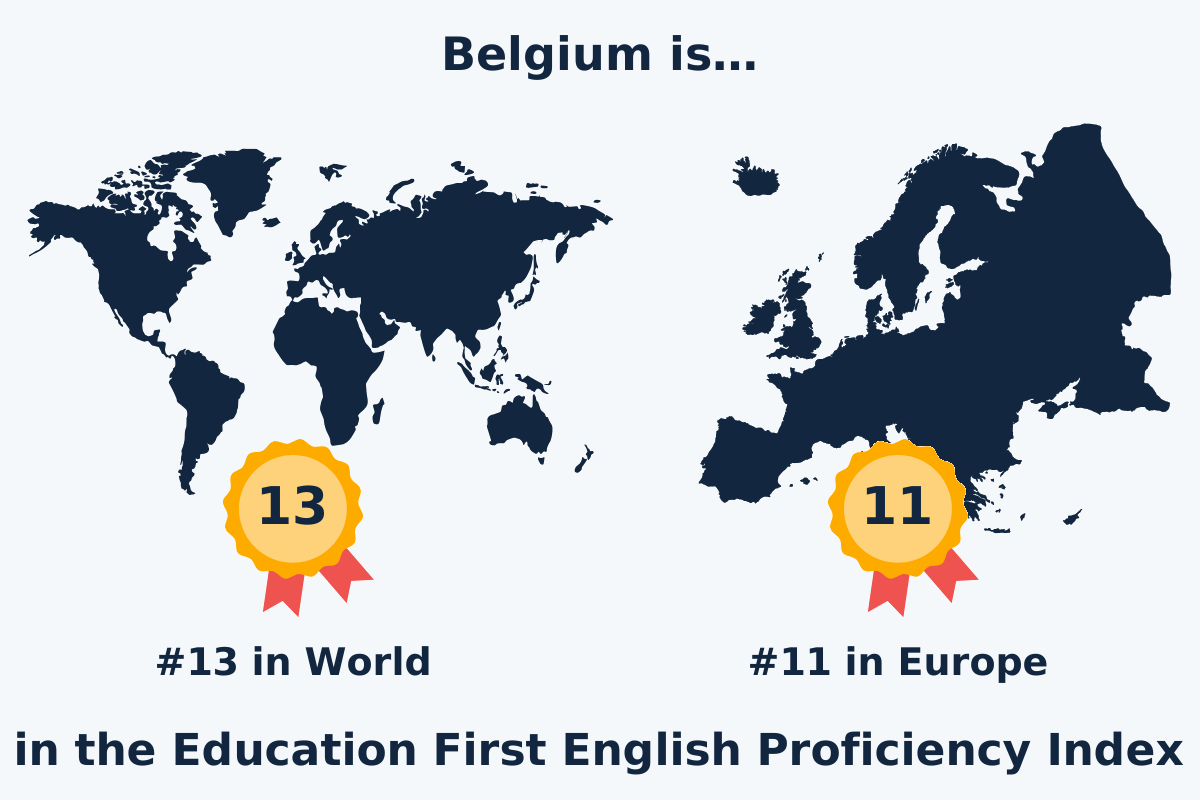
Belgium is a small country, but it packs in a lot of linguistic complexity. It has deep linguistic divisions, with Dutch spoken in the north (Flanders), French in the south (Wallonia), and German in a small eastern region. But with its strong international presence, especially in Brussels, home to the EU and NATO, you have to wonder how English might fit in. How many people there speak it, and how well?
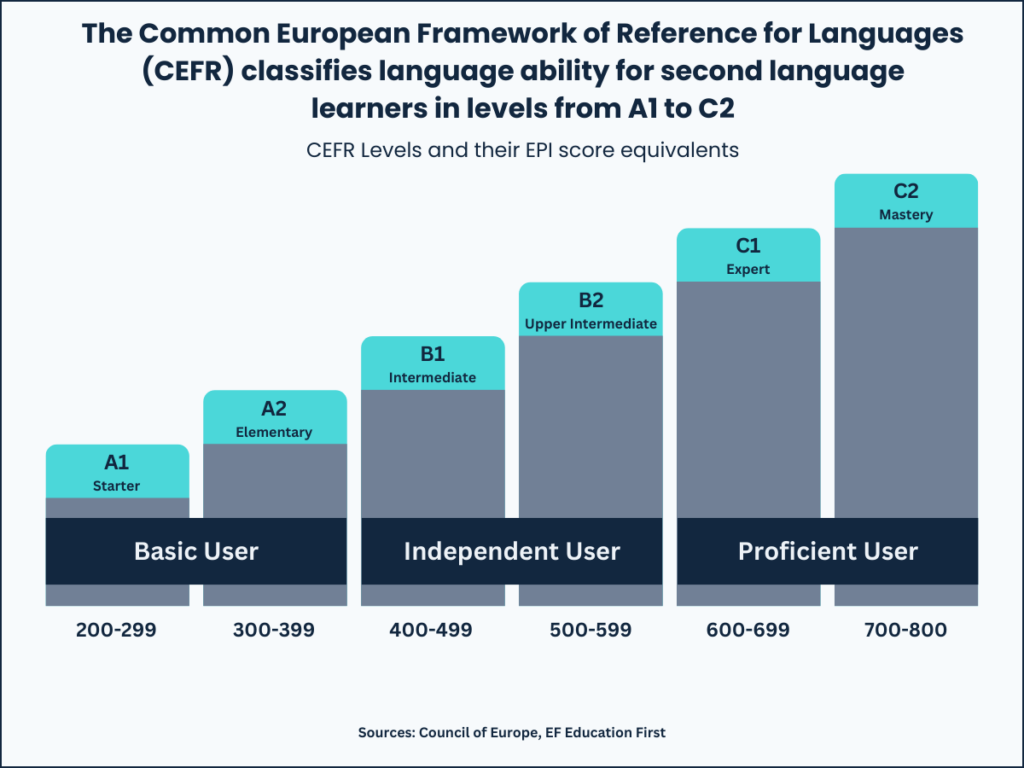
Out of the 10,584,534 people in Belgium, approximately 6,250,000 people can speak English. Or in other words, 60% of the population. Furthermore, Belgium ranks impressively high in global English proficiency indexes, with an average English Proficiency score of 592, which is only 8 points short of reaching the CEFR C1 level, which means high proficiency.
Additionally, this score is well over a staggering 100 points than the global average, which comes in at 477 points out of 700.
Source: Autolingual
However, as with any statistic, there’s more to the story. Age, education, region, and even gender all play a role in how widely and confidently English is spoken across the country. Read on to find out more!
You can also find out how many people in Sweden speak English!, Germany, and Norway.
English Speakers in Belgium (General Stats)
As a country with three official languages, it should come as no surprise that the English language has a substantial presence in Belgium. Here are some general stats on the subject.
- Out of the 10,584,534 people in Belgium, approximately 6,250,000 people can speak English. Or in other words, 60% of the population.
- Belgium has an English proficiency index score of 592, which is over 100 points more than the global average.
- Belgium’s EPI score of 592, which is only 8 points short of reaching the CEFR C1 threshold, which means high proficiency.
- English proficiency in Belgium has grown over the years, especially between 2011 and 2021, when it went from 554 up to 629 out of 700.
- In 2024, the best English speakers in Belgium were between the ages of 21 and 40, consistently achieving very high scores over the last few years.
- In 2024, Belgian men and women’s scores were very close at 594 and 590 respectively.
- According to Eurobarometer, 79% of Belgians think English is the most useful language for their personal development.
- The highest scoring region in 2024 was Antwerp Province with 675 points.
- The capital city of Brussels scored 580 points out of 800 in English proficiency, meaning high proficiency.
Sources: Autolingual, EF English Proficiency Index, CEFR, Eurobarometer
Belgium has an EPI score of 592, which is only 8 points short of reaching the CEFR C1 level, which means high proficiency. This is well over a staggering 100 points than the global average, which comes in at 477 points.
According to the figures, it’s safe to assume that the average Belgian over the age of 20 speaks English at a high level, or more specifically, the equivalent of a B2 on the CEFR scale. What this means in real-world terms is that most Belgians can:
-
Understand the main ideas of complex text on both concrete and abstract topics, including technical discussions in his/her field of specialisation
-
Interact with a degree of fluency and spontaneity that makes regular interaction with native speakers quite possible without strain for either party
-
Produce clear, detailed text on a wide range of subjects and explain a viewpoint on a topical issue giving the advantages and disadvantages of various options.
This should be quite surprising, given that lessons in the English language are not compulsory in Belgian schools. Instead, however, the French, Dutch and German languages are far more prevalent, and are often compulsory learning depending on the region.
That said, rather than their English ability being surprising given this other language focus, some might argue that it is this multilingualism that enables the Belgains to be such good English speakers.
English proficiency in Belgium has largely grown over the years, especially between 2011 and 2021, over which time the score went from just above moderate at 554 up to the very high level of 629.
Since then however, English proficiency in Belgium has been dropping year on year, coming in at 592 points in 2024. This decline could be linked to the somewhat recent global pandemic.
You can also find out how many people in France speak English!
Attitudes Toward Learning English in Belgium
When asked “Thinking about languages other than your mother tongue, which two
languages do you think are the most useful for your personal development?” 79% of those surveyed said English. This was followed by French which came in significantly lower at 40%.
When asked the same question but for their children to learn for their future, 85 percent answered English, which is the same average response for the whole European Union.
Another interesting point to note from the survey was that a greater percentage (46%) said that getting a better job in Belgium was a main advantage in learning a new language than those who said that being able to work in another country was a main advantage (39%).
Eurobarometer also shows that Belgians use online machine translations much more frequently than the whole European Union on average. However the survey question didn’t stipulate which languages are being translated.
Source: Eurobarometer
You can also find out how many people in Germany speak English!
English Speakers in Belgium by Region
The Belgian population can be roughly divided in two main regions linguistically: The Belgian Dutch-speaking Flanders, and the Belgian French-speaking Wallonia. Meanwhile the city and region of Brussels also has a majority of native French speakers.
There can be substantial differences in the English proficiency of people you might meet in Belgium between different regions. The highest scoring region in 2024 was Antwerp Province with 675 points, while Luxembourg scored the lowest at 508 points, meaning there was an overall difference of over 150 points.
The Dutch speaking regions of Belgium far better in their English proficiency than do the French speaking regions, with EPI scores of 653 and 526 respectively. This means that the Dutch speaking region has very high proficiency while the French speaking region simply has high proficiency. This should not come as a surprise given that the Dutch language is very similar to English.
5 regions of Belgium score very high proficiency for English, while the Brussels Capital Region scores high, and the remaining 5 regions have moderate English proficiency.
Here follows a breakdown of each region and their respective English proficiency index scores, and their equivalent CEFR level.
| Region | EPI Score | CEFR Level | Proficiency |
|---|---|---|---|
| Dutch-speaking | 653 | C1 | Very High |
| French-speaking | 526 | B2 | Moderate |
| Antwerp Province | 675 | C1 | Very High |
| East Flanders | 658 | C1 | Very High |
| West Flanders | 657 | C1 | Very High |
| Limburg | 634 | C1 | Very High |
| Flemish Brabant | 627 | C1 | Very High |
| Brussels Capital Region | 569 | B2 | High |
| Hainaut | 541 | B2 | Moderate |
| Liège Province | 528 | B2 | Moderate |
| Walloon Brabant | 521 | B2 | Moderate |
| Namur | 512 | B2 | Moderate |
| Luxembourg | 508 | B2 | Moderate |
Sources: EF English Proficiency Index, CEFR
English Speakers in Belgium by City
Education First, the organisation behind the English proficiency index were not able to provide scores for every municipality in Belgium in 2024, but the ones they did study showed that English proficiency in each was always either high or very high, with scores ranging from 561 at Liège up to an impressive 658 at Leuven.
Here follows a breakdown of each region and their respective English proficiency index scores, and their equivalent CEFR level.
| City | EPI Score | CEFR Level | Proficiency |
|---|---|---|---|
| Leuven | 658 | C1 | Very High |
| Ghent | 655 | C1 | Very High |
| Antwerp | 654 | C1 | Very High |
| Brussels | 580 | B2 | High |
| Liège | 561 | B2 | High |
Sources: EF English Proficiency Index, CEFR
English Speakers in Belgium by Demographic Group
In 2024, the best English speakers in Belgium were between the ages of 21 and 40, consistently achieving very high scores over the last few years, sometimes reaching as high as 654 out of 800.
Meanwhile those aged 18 to 20 years have the lowest average score, with an English proficiency score of 574, which is still a high score, coming in at a B2 level on the CEFR scale in 2024.
Over the years, sometimes women performed better than men in English proficiency, but sometimes it’s been the other way around. In 2024, however, their respective scores were very close, coming in at 590 for women and 594 for men.
Sources: EF English Proficiency Index, CEFR
You can also find out how many people in Norway speak English!
Conclusion
For a country with three official languages - and no official emphasis on English in its national curriculum - Belgium’s level of English proficiency is impressive. With around 60% of the population able to speak English, and an EPI score of 592, Belgium clearly holds its own on the global stage, consistently ranking among the top countries for English skills.
While English is not compulsory in schools, the country’s multilingual environment seems to foster strong language-learning abilities. You will typically find speakers with higher proficiency in the Dutch-speaking areas, particularly in Flanders and Antwerp Province, reflecting the closer linguistic ties between Dutch and English.
Meanwhile the country’s capital of Brussels was traditionally a French speaking area, but now maintains high levels of English usage, thanks in part to the city’s international institutions as home of the European Union and NATO.

Written by Richard Barker
Richard is an English teacher with over 25 years of experience. He has dedicated his life and career to his passion for English, literature, and pedagogy, guiding multiple generations of students on their journey to discovery.